
The Role of School Feeding Programmes
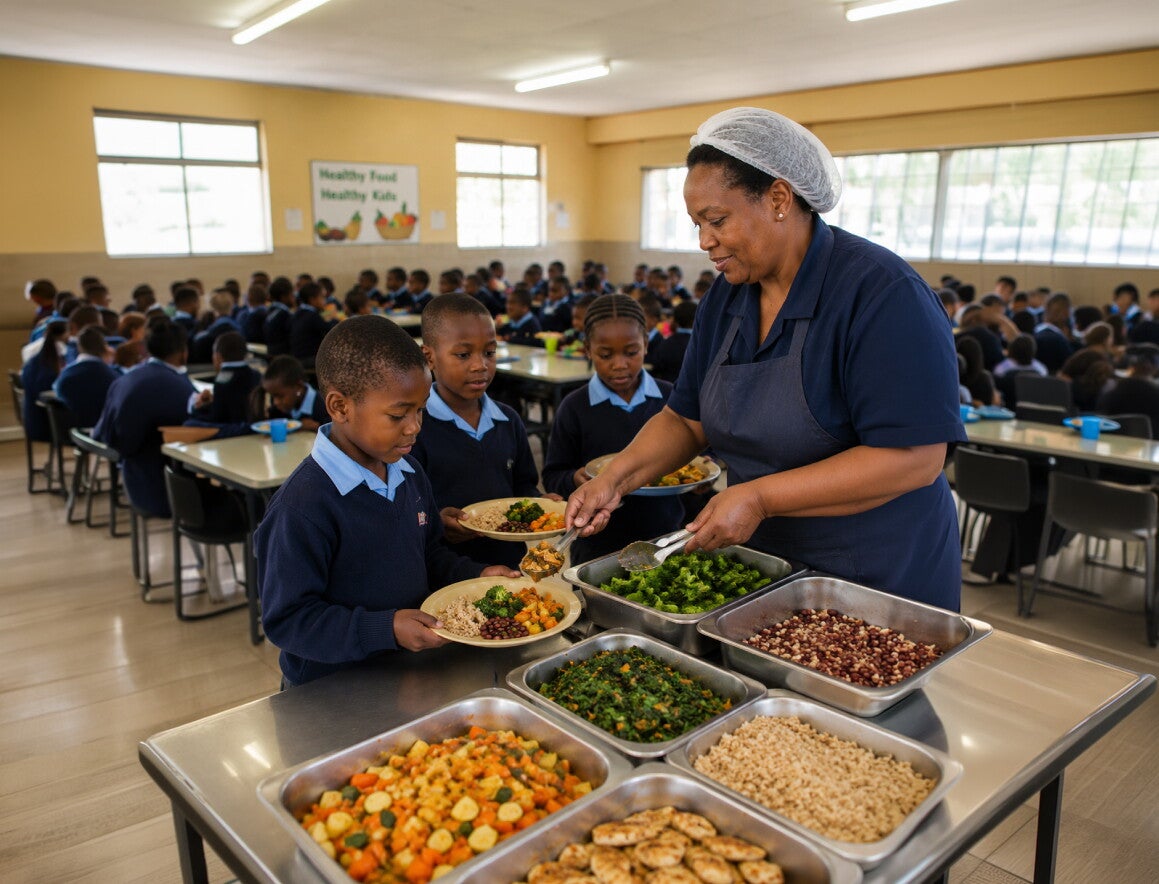
School feeding programmes represent one of the most structurally significant platforms for improving adolescent nutrition across sub-Saharan Africa and other low- and middle-income settings. For a substantial proportion of learners, particularly those from food-insecure households in rural and peri-urban communities, the school meal constitutes the most consistent and nutritionally reliable dietary intake of the day, positioning these programmes at the critical intersection of nutrition, education, and social protection.1,2
The developmental and educational case for their investment is well-supported: randomised controlled trials and longitudinal studies conducted across African settings have demonstrated that adequately designed school feeding interventions are associated with meaningful improvements in school attendance, enrolment rates, and measurable academic outcomes including test scores in numeracy and literacy, with gains particularly pronounced among girls and children from the most economically marginalised households. 2
When nutritionally well-designed, school meals can make a substantive contribution to adolescents' daily requirements for protein, bioavailable iron, zinc, vitamin A, and other micronutrients critical for brain development, physical growth, and immune function. Through these mechanisms, adequate school-based nutrition supports the neurobiological processes, including neurotransmitter synthesis, myelination, and synaptic function, that underpin concentration, working memory, and cognitive performance, thereby reinforcing the bidirectional relationship between nutritional status and educational attainment.1,3,4
However, the existing evidence base reveals a persistent and consequential gap between the potential and the practice of school feeding in many African contexts. Current programme menus are frequently dominated by starchy staples and legumes, with animal-source foods, key providers of bioavailable iron, vitamin B12, calcium, and zinc, included in fewer than one in five programmes.
Fruit is served in only approximately 19% of programmes globally, and green leafy vegetables in only 37%, resulting in chronically low dietary diversity and inadequate micronutrient adequacy ratios that fail to meet adolescents' heightened nutritional requirements. 2,1
These shortfalls are compounded by structural challenges including insufficient per-child budget allocations that are routinely outpaced by food price inflation, inadequate kitchen infrastructure, weak supply chains, limited training of food handlers in nutrition and age-appropriate portioning, and governance deficits that result in inconsistent menu compliance. Secondary-school-age adolescents are particularly underserved: globally, only approximately 6% of secondary-age children are reached by school feeding programmes, and meal specifications, including energy and micronutrient targets, are frequently designed for younger primary-school children and are not adjusted to reflect the substantially higher nutritional demands of pubescent adolescents.2
Strengthening the nutrient density, dietary diversity, and adolescent-appropriateness of school meals is therefore not a peripheral quality improvement but a foundational public health priority. Evidence-informed programme enhancements, including the systematic integration of animal-source foods or fortified products, the inclusion of diverse fruits and vegetables, age-specific portioning standards, and school garden initiatives that support local procurement, have the potential to substantially improve both the nutritional and cognitive outcomes of adolescent learners, particularly in settings where school-based nutrition represents the primary opportunity for dietary intervention.1,3,2
References
- Brkić, D., Concetti, C., Rémond Derbez, N., & Hauser, J. (2026). Relationship between nutrition, brain, cognition, learning, and behavior in school age children. Nutrition Reviews. [academic.oup.com]
- López Sebastiani, V., Quiroz Cornejo, K. V., Arellano Salazar, M. P., Monje Bolivar, F., & Samillan, V. J. (2026). Micronutrient balance and brain function. Frontiers in Molecular Biosciences. [pmc.ncbi.nlm.nih.gov]
- MacBrain Research Team. (2024). Nutrition’s impact on adolescent brain function and academic performance. [macbrain.org]
- World Health Organisation. (2018). Guideline: implementing effective actions for improving adolescent nutrition. [who.int]
If you liked this post you may also like


